
For years, spoken word has endured as a potent form of artistic expression, capable of narrating stories, provoking introspection, preserving culture and forging human connection through the deliberate power of language. Yet, despite its undeniable creative and cultural value, the genre has often remained peripheral to Ghana’s mainstream music discourse. Ghanaian spoken word and Afroword artiste Pengod is resolutely seeking to alter that narrative.
Pengod has emerged as a vocal advocate for the recognition of spoken word as a household genre in Ghana, while simultaneously championing Afroword as a contemporary African expression that fuses spoken word with African sound. His advocacy is anchored in a singular conviction: words can embody rhythm, rhythm can transmit culture, and spoken word can rightfully occupy the same mainstream cultural space as other established musical forms.
His campaign extends far beyond performance. Pengod has deliberately taken the conversation to Ghana’s leading television and radio platforms, leveraging media interviews to articulate why spoken word deserves enhanced visibility, programming opportunities and institutional recognition within the national music industry.
One notable platform on which he advanced this argument was Hitz FM’s Daybreak Hitz, where he engaged broadcaster Doreen Avio in an extensive discussion on spoken word and its place within Ghanaian music. The conversation afforded him the opportunity to outline his vision for elevating the genre beyond poetry stages and embedding it within the mainstream media and music ecosystem.
He further sustained this dialogue on Adom TV’s Badwam, in an interview with Sister Sandy, where he continued to explore spoken word’s potential within Ghana’s entertainment landscape. Through these appearances, Pengod has consistently emphasized that spoken word should not be regarded merely as a supporting act or a literary interlude, but as a self-sufficient artistic form capable of standing confidently within the broader music industry.
Central to his advocacy is the call for greater representation on mainstream radio and television. Pengod contends that consistent exposure is indispensable to cultivating familiarity with the genre. When audiences encounter spoken word regularly, discover its diverse stylistic expressions and experience it alongside other musical forms, the genre ceases to be confined to special events or niche audiences and becomes an integral part of everyday cultural consumption.
His advocacy also encompasses Ghana’s major music award schemes, particularly the Telecel Ghana Music Awards (TGMA). Pengod has called for spoken word and Afroword to receive substantive recognition within award structures, arguing that Ghana’s music industry must continue to evolve in order to accommodate innovative forms of musical expression emerging from the creative community.
For Pengod, recognition transcends the conferment of an award. It is about establishing a system in which spoken word artists can be appropriately identified, celebrated and afforded opportunities to compete and contribute meaningfully within the national music industry. Inclusion in platforms such as the TGMA, in his view, would broaden public understanding of the genre and provide artistes operating within the space with a more defined and visible platform.
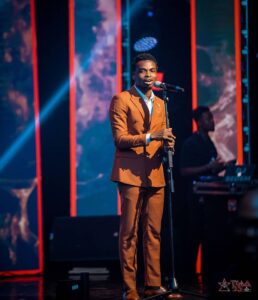
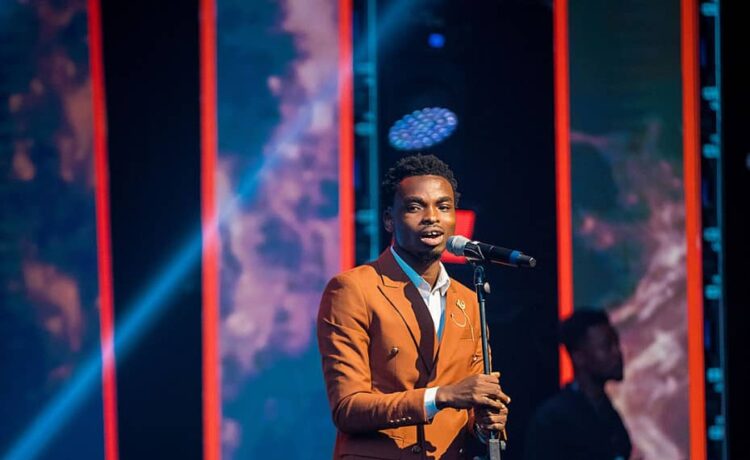
His advocacy is deeply informed by his own trajectory as a performer. Pengod has already taken spoken word into spaces traditionally associated with the wider music industry, becoming the first spoken word artiste to perform at the TGMA Industry Mixer in 2024 and performing at the Ghana Music Awards USA Nominees Unveiling in Kumasi. These appearances form part of his broader effort to demonstrate that spoken word artistes can participate meaningfully and professionally within major music industry platforms.
Rather than positioning spoken word and conventional music as competing forms, Pengod advocates for a more expansive understanding of what music can encompass. His Afroword concept seeks to exemplify this possibility by merging the lyrical potency of spoken word with African musical elements, thereby creating a sound that is rooted in African identity while remaining accessible to contemporary audiences.
Consequently, Pengod’s message has evolved beyond the question of whether spoken word belongs in Ghana’s music industry. His advocacy is now focused on how the industry can intentionally create space for the genre to flourish, reach wider audiences, secure media exposure and become a recognizable component of Ghana’s musical identity.
As Ghana’s creative industry continues to evolve, conversations surrounding genre classification, award categories and mainstream representation will remain critical. Pengod’s media engagements and public advocacy have firmly positioned spoken word and Afroword within that discourse, with the artiste continuing to employ his voice both as a performer and as an advocate for greater recognition.
His vision is unequivocal: spoken word should be heard, understood, programmed, performed and celebrated. Afroword should be afforded the opportunity to develop as a distinctive African musical expression. And Ghana’s music industry should remain receptive to new forms of creativity that reflect the evolving voices and identities of its people.
Through his music, performances, television interviews, radio conversations and sustained advocacy, Pengod is methodically moving spoken word from the margins toward the mainstream, one platform, one performance and one conversation at a time.